
The New York Times found that people of color are less likely to get a higher paying job, or even get a low-paying job, because of their look or name. People with a more ‘white’-sounding name had a higher chance of getting called back from a job interview, whereas people with a ‘Black’ name were less likely to get a callback. Some people have been known to change their name just so their resumes will be taken seriously.
Without a reliable job or income, food insecurity becomes a reality. An article by Feeding America Research states, “food insecurity is an economic condition, meaning it is driven primarily by lack of money and other critical resources”— resources received by being employed and having a stable income.
While only 7% of U.S. counties have a majority population of Black, Latino, or Native Americans, these counties represent 35% of areas with the highest unemployment rate. In fact, according to the U.S.D.A, 1 in 4 people who identify as black don’t know where their next meal is coming from.
Getting declined from high-paying, full-time, reliable jobs leads to no choice but to turn to lower-paying, poorer quality jobs. Over 40% of frontline workers identify as either Black, Hispanic, Asian, or other categories besides white.
While Newton is usually seen as an affluent town and the majority of the population identifies as white (over 76% according to the City of Newton), food and economic insecurity still exists and is commonly overlooked. Cities often fall prey to population averages making food insecurity and other disparities look less severe than they are. But for every wealthy person pulling the average up, somebody in poverty pulls the average down.
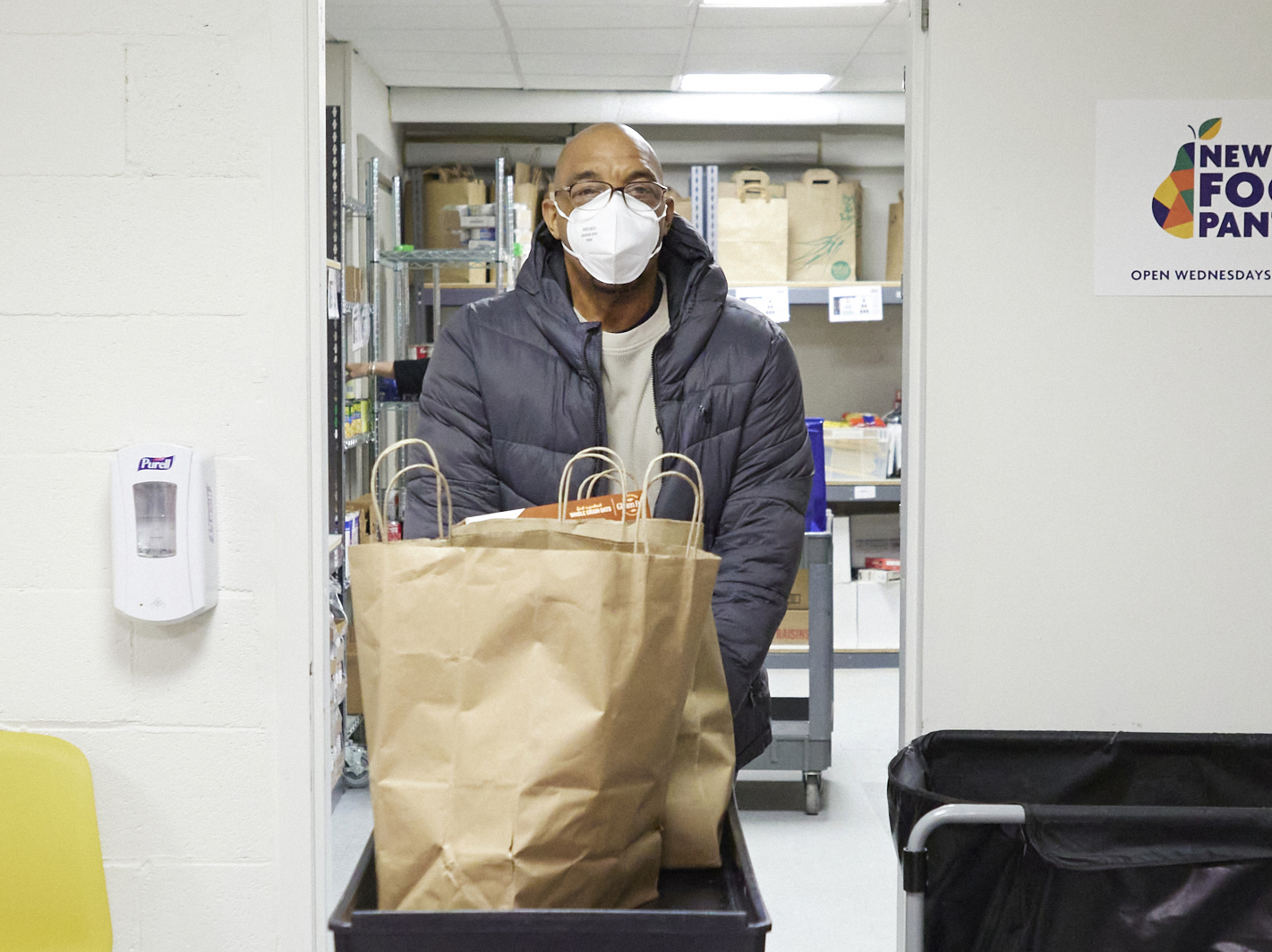
The Newton Food Pantry serves over 200 households of all ethnicities, ages, genders, and cultures every week. They are proud to play a part in addressing institutional racism by simply having representation. To quote our BIPOC volunteer Leti Meza Riedewald, “By volunteering, I want to be a reminder that people who look like me can offer assistance too, not only be in need of assistance.” While this is a step in a giant staircase, it is a step in the right direction!
As we all continue to address systematic and institutional racism, let’s not forget the direct impact it can have on economic and, therefore, food insecurity.